
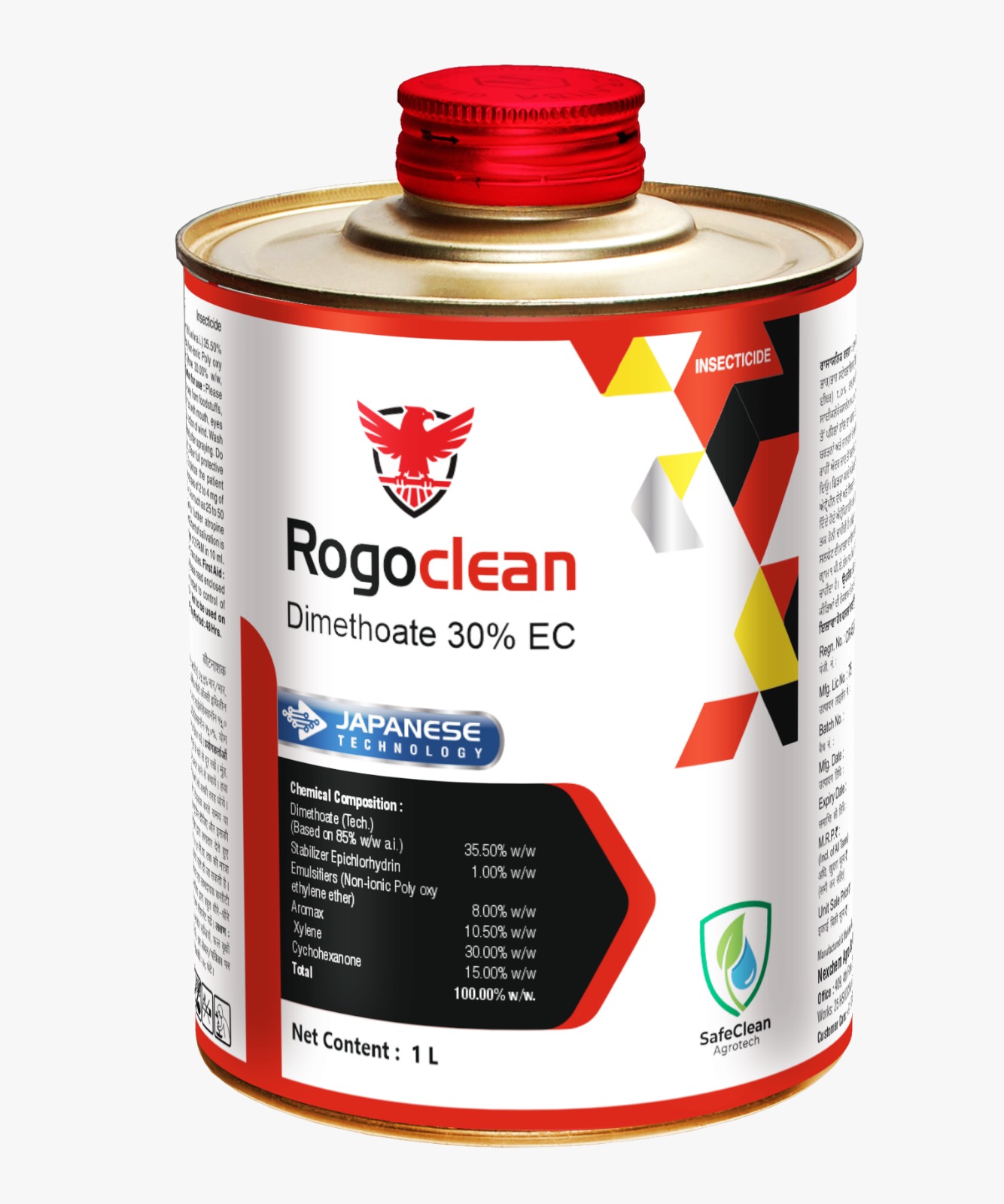
Dimethoate 30% EC is a high-performance, broad-spectrum insecticide and acaricide featuring both systemic and contact properties. Formulated as an Emulsifiable Concentrate, it is designed for the effective control of a wide array of sucking and chewing pests that damage agricultural and horticultural crops.
1. Mode of Action
Dimethoate acts as a cholinesterase inhibitor. Upon application, it is rapidly absorbed by the plant’s green parts and translocated via the vascular system (acropetal movement). This ensures that even pests feeding on untreated new growth or the undersides of leaves are neutralized. It also provides immediate “knock-down” control upon direct contact with the insect.
2. Key Benefits
-
Dual-Action Control: Provides immediate relief through contact and long-term protection through systemic activity.
-
Broad Spectrum: Highly effective against Aphids, Thrips, Whiteflies, Mites, Jassids, and Fruit Flies.
-
Rapid Absorption: Quickly becomes rain-fast once dried, reducing the risk of runoff.
-
Versatile Application: Suitable for use in a variety of crops including cotton, citrus, vegetables, pulses, and oilseeds.
3. Technical Specifications
-
Active Ingredient: Dimethoate
-
Chemical Class: Organophosphate
-
Formulation: EC (Emulsifiable Concentrate)
-
Concentration: 30% w/w
-
Appearance: Clear, yellowish to blue-green liquid with a strong characteristic odor.
4. Application Guidelines
To achieve maximum efficacy, Dimethoate 30% EC should be diluted with water as per the recommended dosage for the specific crop and pest. It is most effective when applied during the early stages of pest infestation.
5. Safety & Stewardship
-
Toxicity: Classified as a toxic chemical. Handle with extreme care.
-
Re-entry Interval (REI): Ensure the treated area is avoided for at least 24–48 hours post-application.
-
Pollinator Safety: Highly toxic to bees; do not apply during active flowering or when bees are foraging.
Pro-Tip for your writing:
If this description is for a commercial label, ensure you include the mandatory local regulatory warnings (like the “Danger” or “Poison” skull and crossbones symbol) and the specific “Pre-Harvest Interval” (PHI) required by your region’s laws.
Reviews
There are no reviews yet.